
SERVING NORCAL SINCE 2008
Is your garage floor ready for epoxy?
Most likely, yes. Most lived-in garage floors are ready for residential epoxy flooring, even with stains and small cracks. Your slab doesn't need to look good before we start. It just needs to be solid.
That's because prep is part of every job we do. Every quote includes:
Diamond grind the whole floor
50 feet of hairline crack repair
Coating on stem walls
An epoxy base coat
Full broadcast of vinyl flake
A clear polyaspartic topcoat
Our Limited Lifetime Warranty
A walk-through with your crew lead
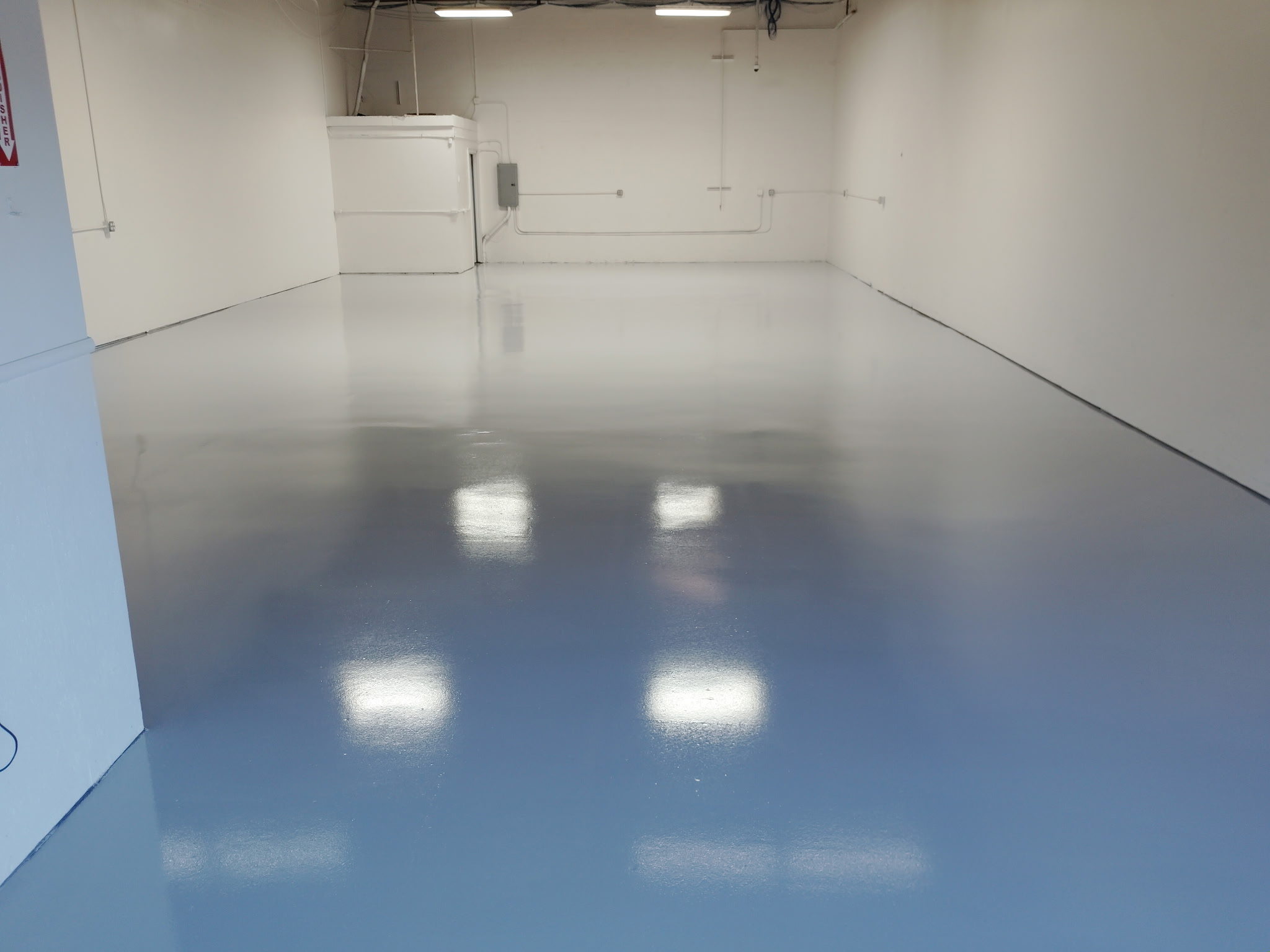
Here's what usually looks worse than it is.
Oil drips, tire marks, and old stains. Diamond grinding takes off the top layer of concrete. The coating then bonds to clean concrete underneath.
Hairline cracks. These are normal in concrete. We fill them before we coat so they don't show through.
A rough, dusty, or worn surface. Grinding evens it out and gives the base coat something to grip.
An old coating that's peeling. We deal with the failed layer before anything new goes down.

Not sure about your floor? That's what a free estimate is for. Call (530) 677-7303 and tell us how you use your garage. We can talk it through on the phone, look at photos you email us, or come see the slab in person. All three are free.
Call (530) 677-7303Why older concrete needs prep before coating
The top of an older slab isn't the same concrete that was poured. Years of parking, spills, and cleaning leave things on and in the surface. A coating sticks to whatever it touches first. If that's old sealer or soaked-in oil, the floor is only as strong as that layer.
That's why we diamond grind every floor. We never acid etch. Grinding gets us down to clean, solid concrete, so the coating grabs the slab itself.
Here's what years of garage life leave behind, and how we handle each one.
Oil that soaked in. Car drips work down into the concrete. Grinding removes the stained top layer.
Old sealer, paint, or curing compound. Many slabs got a clear coat at some point, and you often can't see it. We grind it off so the new coating isn't stuck to the old one.
Slick tire paths. Tires polish the concrete where cars roll in and out. Grinding gives those spots the same texture as the rest of the floor.
Cracks, chips, and pits. We fill and repair them so the finished floor is smooth.
Worn control joints. These are the straight cuts in the slab. We clean them out and fix broken edges. Deeper work is handled by our Concrete Crack and Joint Repair service.
Want a quick look at your own slab?
Sprinkle a little water on a few spots. If it soaks in and darkens the concrete, that spot is open. If it beads up like rain on a waxed car, something is sitting on top, like sealer or oil. That's fine. It just shows why we grind first.
It also explains why a coating rolled onto an older floor often wears off in patches, right where the tires sit. It never had clean concrete to hold on to.
So the age of your floor doesn't decide how it turns out. Prep does. A 30-year-old slab that's been ground and repaired gets the same solid start as a newer one.
Why we use both epoxy and polyaspartic
You don't have to choose between them. Our epoxy floor installers use both, and each layer does the job it's best at.
Epoxy goes on first
It's thick and gives the crew time to spread it evenly and give a full broadcast of vinyl flake. It makes a strong base that grips the concrete.
Polyaspartic goes on last
It cures, meaning it hardens all the way, much faster than epoxy. It is also UV stable. Plain epoxy can turn yellow over time in sunlight, so we never leave it as the top layer.
We use Citadel products only.
Summers in Rancho Cordova are long and hot. Lots of people leave the garage door open in the afternoon, and the sun lands right on the floor. A polyaspartic topcoat keeps that floor looking even. It also stands up to hot tires coming in off summer pavement.
Polyaspartic sets fast, so it has to go on quickly and carefully. There's little time to fix a spot before it hardens. That's a job for an experienced crew, not a weekend kit. Every one of our crew leads has been with us at least 5 years, and several have been here 10 to 15.
Want a different look? Metallic finishes are built differently from flake floors. Our Polyaspartic Garage Floor Coating and Polyurea Garage Floor Coating pages cover other options. We'll go over colors and choices during your estimate.
What happens during your installation
Before install day, here's how it works.
You get a free quote by phone, by email, or at an on-site estimate.
You pick your flake color.
Once you say yes, we confirm the job and give you an arrival window.
Before the crew arrives, clear the garage floor completely. Start a day or two early. Moving shelves and bikes is easier than the morning of.
On install day, a crew lead and a helper do your floor.
Here's the order.
Diamond grind the whole floor
Repair cracks, chips, and worn joints
Lay down the epoxy base coat
Throw the flake by hand until the base coat won't take any more
Roll on the clear polyaspartic topcoat
Each step has to be done right before the next one starts. Rushing one step shortchanges every layer on top of it.
How long does it take?
Most garages take 2 days. You can walk on the floor after 24 hours and park on it after 48 hours. Heavy items like tool chests, freezers, and gym equipment wait the full 48 hours too.
You see the floor before you pay
When the floor is done, your crew lead walks it with you. There's no deposit. You pay in full when the job is done, after you've seen the finished floor. If you have a question about anything, ask it right there. The person answering is the one who put the floor down.
For most homeowners, clearing the garage is the hardest part. We handle the rest. Call (530) 677-7303 for a free estimate.
Call (530) 677-7303What if the coating peels?
Every floor comes with our Limited Lifetime Warranty. It covers failure from a prep problem or a product problem, like the coating peeling off the concrete.
First 15 years: fixed 100% free
For the first 15 years, we fix it at no cost to you.
After 15 years: prorated repairs
After that, we still handle repairs for as long as you own the home. Those repairs are prorated, and you pay time and materials only.
When we'll tell you to hold off
Most garages are ready. A few aren't, and we'll tell you straight if yours is one of them.
Brand new concrete. New concrete needs time to cure before it takes a coating. Ask your concrete contractor when it's fully cured, then call us.
A slab that's moving. If a section has sunk, lifted, or has cracks that keep getting wider, have a concrete contractor look at it first. A coating covers the surface. Whatever the slab does underneath, the floor on top will follow.
Moisture. Damp spots that come and go can keep a coating from bonding. Our Moisture Testing and Mitigation service checks the slab and deals with it first. If water comes in from outside, like a worn door seal or a gutter that dumps by the driveway, fix that cause before coating.
Big garage work coming up. Finish bolt-down cabinets, plumbing, or drywall first. Then the floor goes down once and stays clean.
The garage is about to change. If the slab will be torn out or the space turned into a room soon, put that money toward the bigger project.
Here's a simple test. Is the concrete solid, and will it stay a garage? If yes, you're a good fit. Stains and wear are exactly what prep is for.
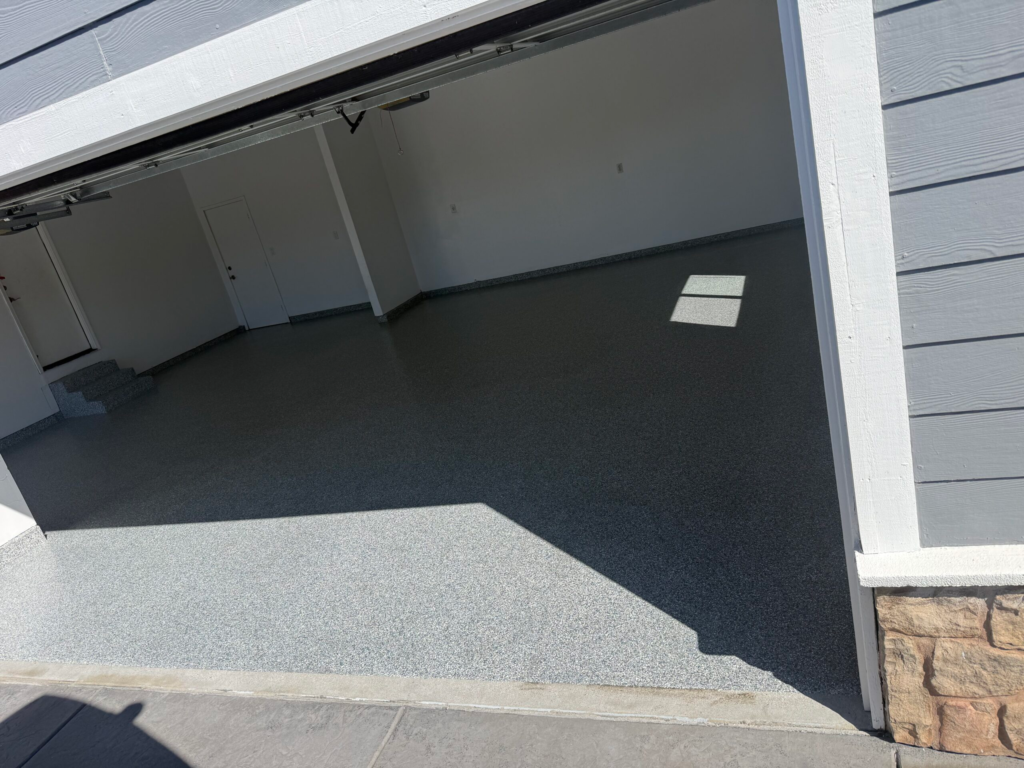
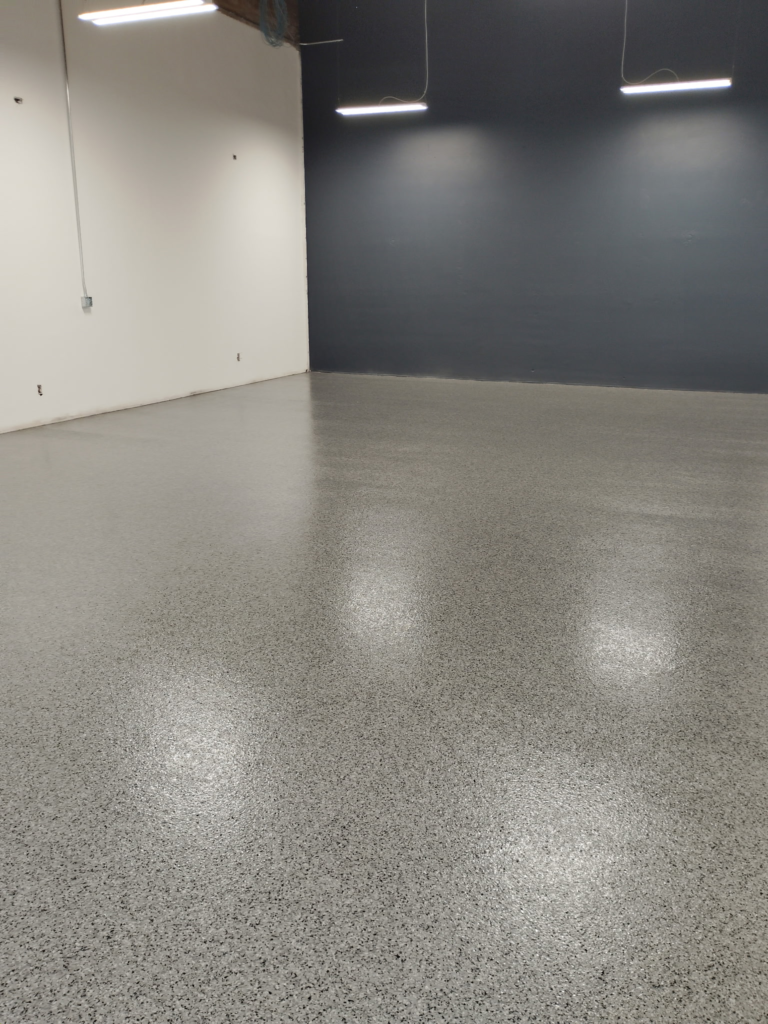
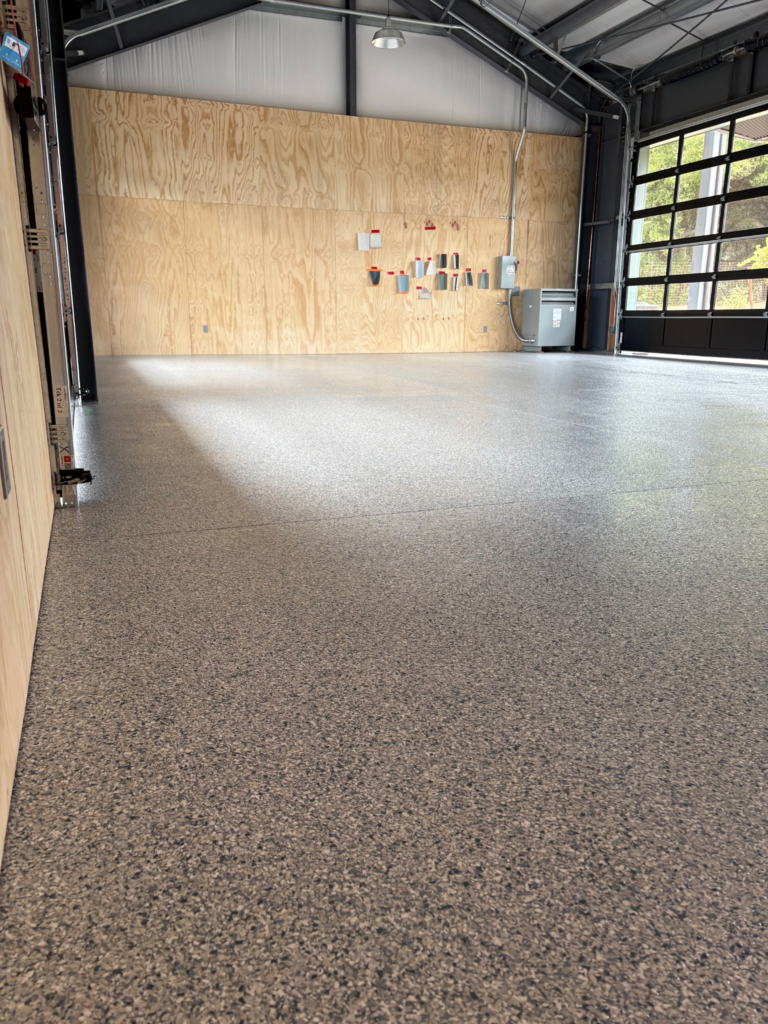
Garage Floors We've Installed



Frequently asked questions
How long until I can use my garage after the epoxy goes down?
You can walk on your new epoxy flooring after 24 hours. You can park and move heavy items back in after 48 hours. Most jobs take 2 days, so plan to park outside for a few days.
Do I need to empty the whole garage?
Yes. The crew needs the whole floor clear to grind and coat every inch. Start a day or two early so you're not rushing the morning we arrive.
Will my cracks come back through the new epoxy?
We fill hairline cracks before coating so they don't show through. Every job includes 50 feet of hairline crack repair. If your slab needs more, we tell you up front. Deeper cracks and worn joints get extra repair. A crack that keeps growing is a slab problem, and we'll tell you to have it checked before we coat.
How much does epoxy flooring cost?
Every garage is quoted on its own. The size of the garage and how much crack repair it needs are the biggest factors. When you compare quotes, ask each company what goes in every layer. Two quotes that both say "epoxy floor" can describe very different floors.
Do I pay anything up front?
No. There's no deposit. You pay in full when the job is done, after you've walked the finished floor with your crew lead. We give a discount if you pay with cash or check, and we take all major credit cards.
Get your free estimate
Epoxy Armor Systems has been coating floors since 2008, with over 30,000 floors installed. We're licensed, bonded, and insured, California Licensed Contractor #990361. Every floor is backed by our Limited Lifetime Warranty, and you don't pay until you've seen the finished job.
We serve Rancho Cordova, Folsom, Elk Grove, Santa Rosa, Auburn, Sacramento, and the surrounding areas across Northern California.
Call (530) 677-7303 and tell us how you use your garage. We'll give you a free estimate by phone, by email, or in person.
Call (530) 677-7303