
SERVING NORCAL SINCE 2008
Decorative Garage Floor Coatings
Pick flake if your garage is a working space for cars, tools, kids, and weekend projects. It hides dirt, gives your shoes some grip, and is easy to live with. Pick metallic if you want a glossy, one-of-a-kind look in a cleaner, lower-traffic space and you don't mind wiping it down more often.
Flake hides dirt and gives your shoes grip
Metallic adds a glossy, one-of-a-kind look
Every floor diamond ground and crack repaired
UV-stable polyaspartic topcoat on both finishes
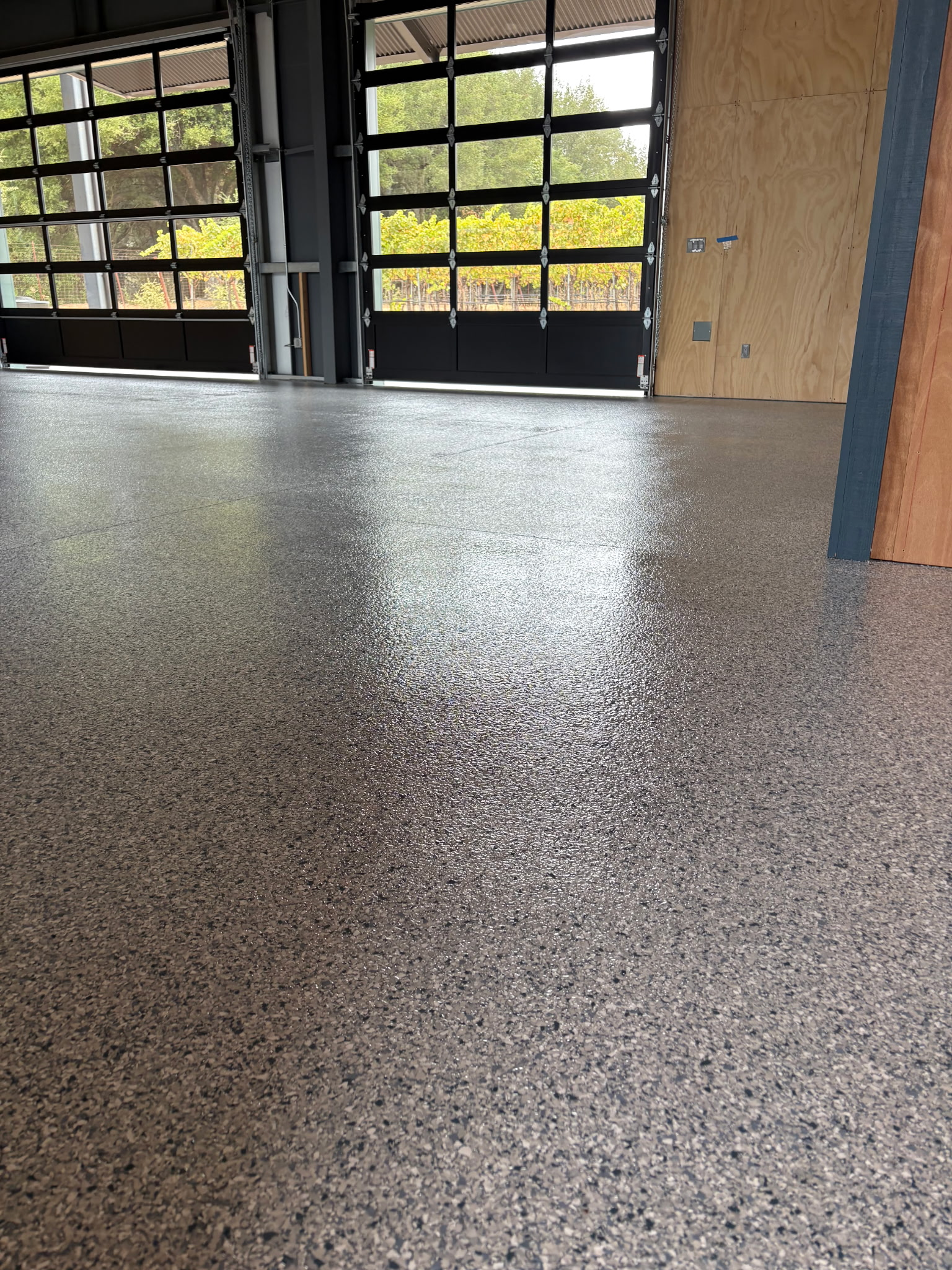
Most people start this choice by looking at photos. That's fine, but the better question is how you use your garage on a normal Tuesday. Both finishes are strong and built to last. They just look and act differently once you're living on them.
Color is the part most people go back and forth on, and that's normal. Our general manager handles color selection with customers and can talk you through flake blends and metallic color options by phone, by email, or during an on-site estimate. That way you can pick something that suits your home, not just a sample on a screen.
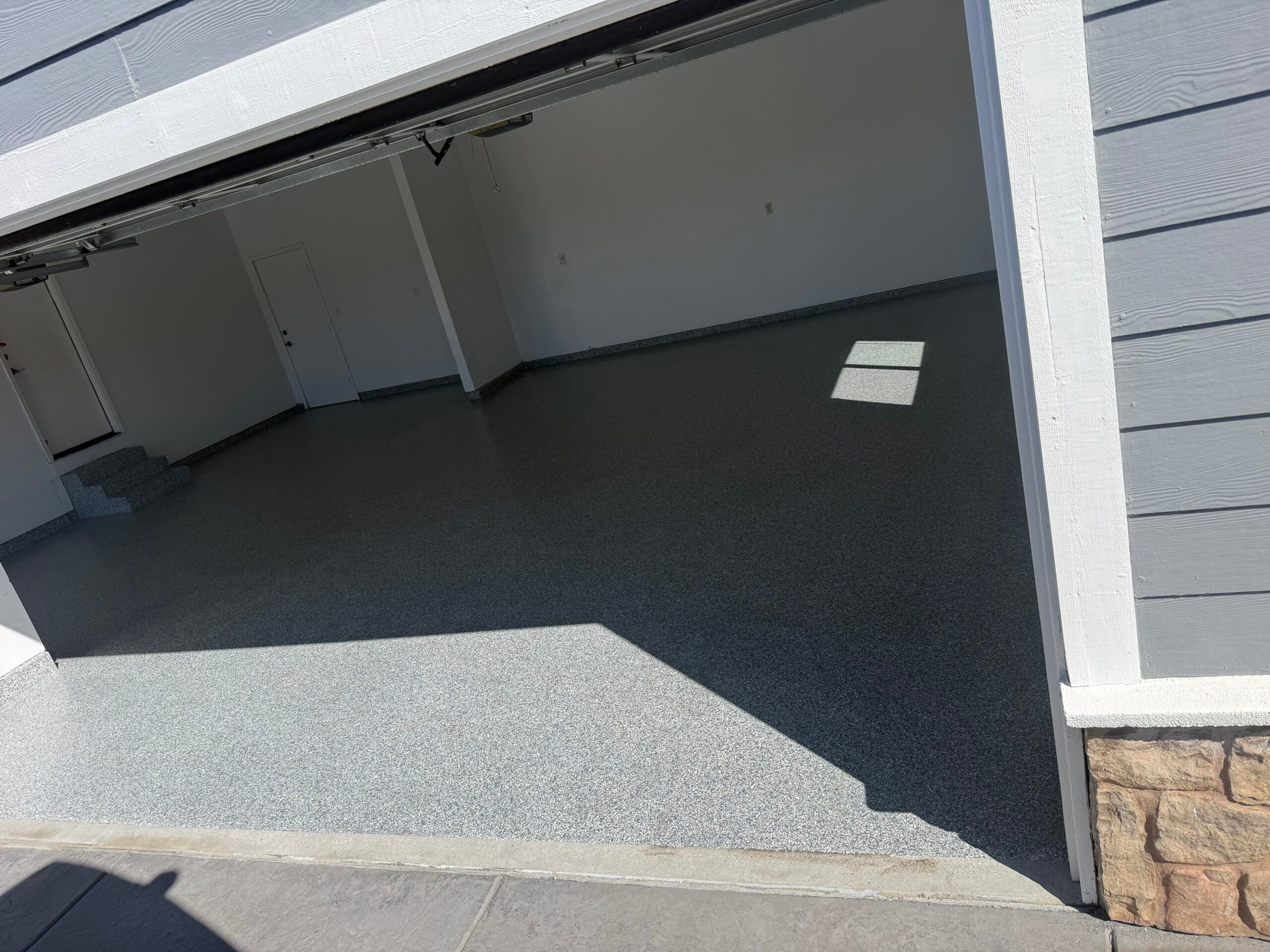
Call (530) 677-7303 for a free estimate. Tell us how you use your garage, and we'll help you decide between flake and metallic. We can put a quote together by phone, by email, or at an on-site estimate.
Call (530) 677-7303Choosing Between Flake and Metallic for Your Garage
Here's how each finish is built, and where each one fits best.
How a flake floor is made
A flake floor starts with a colored base coat. Then we broadcast the flake, which means we throw the vinyl chips across the wet coat by hand. We keep throwing until the base coat stops absorbing it. After that, we scrape off the loose chips and seal the floor with a clear topcoat.
That full layer of chips is what makes flake so easy to live with. The speckled pattern hides dust, tire marks, and small chips from a dropped wrench. It also leaves a light texture that gives your shoes some grip. You can choose a blend that's mostly gray and quiet, or one with more color that matches your house trim.
How a metallic floor is made
A metallic floor uses a coat with fine metallic pigment mixed in. As it's worked across the floor, the pigment moves and settles into swirls, ripples, and depth that look a bit like polished stone or liquid metal. No two metallic floors come out the same. That's the appeal, and it's also the trade-off. You choose the colors, but you can't pick the exact pattern ahead of time.
Metallic has a smooth, high-gloss surface. That shine shows dust, footprints, and fine scratches sooner than flake does, and a smooth floor can get slick when it's wet. If you want metallic in a space where water gets tracked in, ask about adding grit to the topcoat. We also install anti-slip floor coatings.
Which finish fits your garage?
Flake fits best when
You park daily drivers inside, work on cars or projects, have kids and bikes coming in and out, or just want a floor that looks clean between sweeps.
Metallic fits best for
A car collection, a home gym, a hobby room, a showroom-style garage, or any space where the floor is part of the look and foot traffic stays light.
If you're still on the fence, think about the next five years in that garage, not just how it looks on day one.
Here's a common picture. You come home, pull in, and step out onto a floor with a little dried mud and a leaf blower sitting in the corner. If that's your garage, flake will make you happier. Now picture a garage where the car rarely moves, the walls are finished, and you want guests to say "wow" when the door goes up. That's where metallic makes sense.
Garage Floors We've Installed

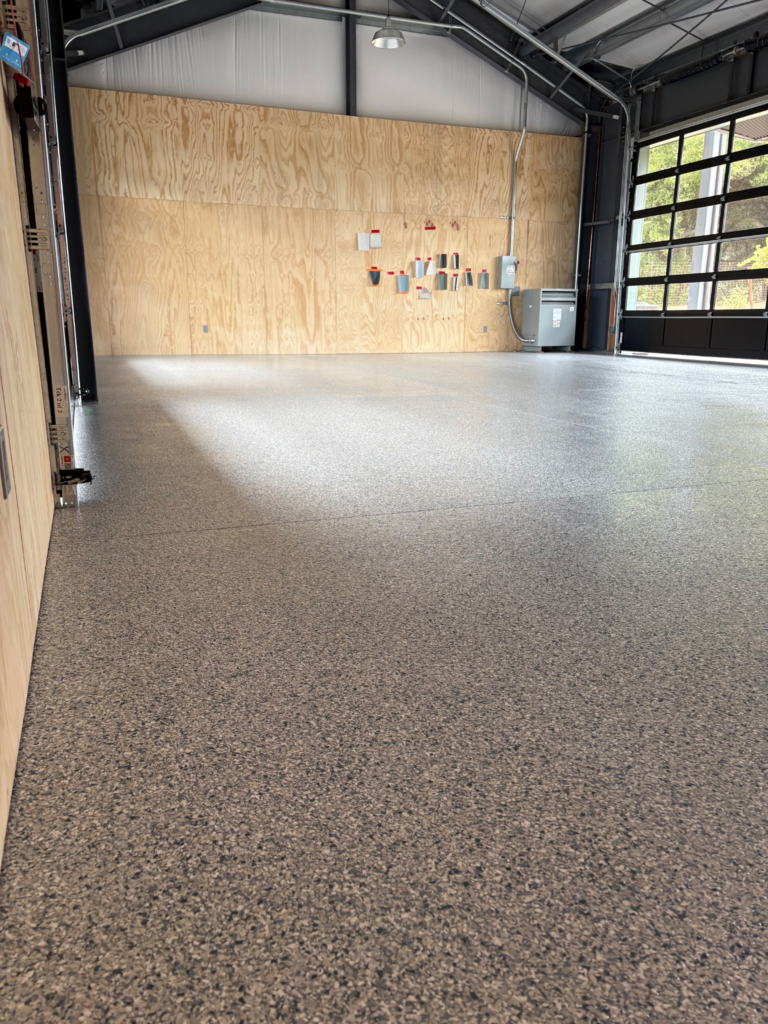


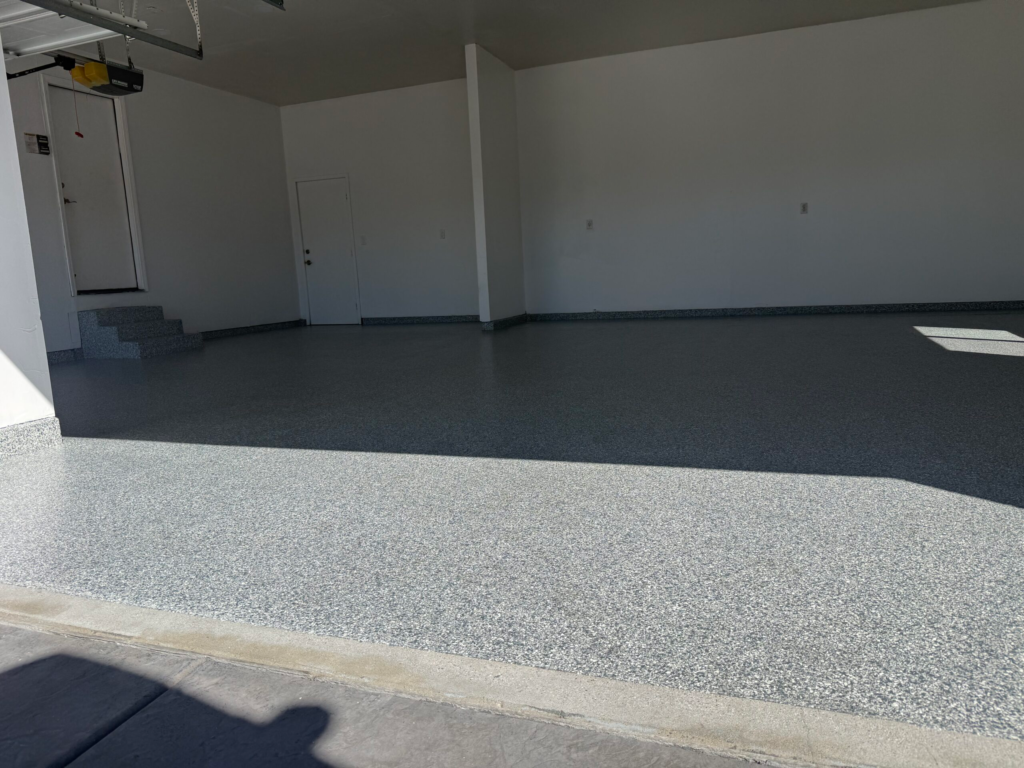

Why Surface Prep Decides How the Finish Looks and Lasts
The color and pattern you picked only look right, and only stay put, if the concrete under them is ready. Prep is the part you won't see when the job's done, but it decides how the floor looks on day one and how it holds up years from now.
Here's the simple version. A coating has to grab onto the concrete. Bare garage concrete is often smooth on top and may carry oil, old sealer, or a dusty top layer. A coating laid over that is sitting on the surface instead of gripping it. So we grind first.
Diamond grind the whole floor
Grinding takes off that weak top layer and opens the pores of the concrete. That gives the base coat something rough and clean to soak into, which makes a strong bond. It's the same reason you sand wood before you paint it, only with heavier equipment and harder material.
Repair the cracks
Most garage slabs have a few hairline cracks, and some have wider ones or worn control joints. We fill and level them before any coating goes down. If cracks or joints need more than a basic fix, we also handle concrete crack and joint repair as its own service.
Prep matters for both finishes, but it shows up in different ways.
Flake
The full layer of chips hides small marks on the surface, so the main job of prep here is grip. A well-ground floor holds the base coat and the flake tightly, so the floor stays together under hot tires, dropped tools, and daily parking.
Metallic
There's nothing to hide behind. The high-gloss finish catches light, and light shows every low spot, ridge, or patch underneath. A flat, even grind and smooth repairs help the swirls and depth look like they belong, not like they're sitting on a bumpy slab.
That second point surprises people. They expect metallic to be the fancy part of the job. In truth, a lot of what makes a metallic floor look good happens before the metallic coat is even mixed.
We also use one product line, Citadel, on our floors. Our crews know how it goes on, how it reacts, and how it bonds to a floor they've prepped themselves. That steady routine is part of why the finish comes out the way it should.
The people doing this work have done it for a long time. All of our crew leads at Epoxy Armor Systems have been with us at least 5 years, and several have 10 to 15 years. They grind, repair, and install the same job from start to finish, so the person who prepped your floor is the person who coats it.
Ask every installer how they prep
As our general manager puts it, every step is just as important as the next. When you compare quotes, ask each epoxy floor contractor how they prep the concrete. If the answer is a quick wash or an acid etch instead of grinding, you're comparing two different jobs, not just two prices. If you have questions about your slab before the job, we also offer concrete grinding and surface prep and moisture testing and mitigation as listed services.
Handling Sacramento-Area Heat and Hot-Tire Pickup
A well-bonded, fully cured floor handles hot tires just fine. Hot-tire pickup happens when a coating is too weak, too thin, or not stuck well enough to the concrete, and that's a prep and product question, not a reason to skip a coated floor.
Here's what the term means. Car tires get hot on the road. When you park, the hot rubber softens a weak coating a little and grips it. As the tire cools, it shrinks and can pull a patch of coating up with it. You'd see it as bare spots right where your tires sit.
This matters more in Rancho Cordova than in a lot of places. Summers here are long, hot, and dry, and triple-digit days aren't unusual. Plenty of folks drive home on Highway 50, so the tires are good and hot by the time they pull into the garage. Garages also hold that heat.
So what keeps a floor in place? Three things, and they work together.
Bond
A coating that has soaked into ground concrete is gripping the slab, not sitting on top of it. That's why the grinding described above comes first.
Build
A full base coat with a broadcast flake layer and a clear topcoat is a thicker, tougher system than a thin rolled-on paint.
Cure time
A coating keeps hardening after it feels dry. Putting weight on it too soon is one of the easier ways to mark a new floor.
On cure time, here's what we tell people: you can walk on the floor after 24 hours, and you can bring heavy items back in after 48 hours. If you're not sure when to park your car on it, ask us. We'd rather you wait an extra day than guess.
Sun is the other part of heat. Our clear topcoat is polyaspartic, and polyaspartic is UV stable. That means it's made to hold its color in sunlight. We use it as the top layer on every floor we install.
Flake and metallic handle heat a little differently:
Flake. The chip layer and textured topcoat hide light tire scuffs, so a daily driver won't leave much of a trace.
Metallic. The smooth, glossy surface shows tire marks sooner. They wipe off, but you'll see them. If you park hot cars on a metallic floor every day, plan on a quick wipe now and then.
Heat matters during the install, too. Warm concrete makes coatings set up faster, so there's less working time to spread a base coat, broadcast the flake, or move the metallic pigment into its swirls. That's where experience shows. Our crew leads have been doing this for at least 5 years, several for 10 to 15, and they're used to working in Sacramento-area summers.
Our general manager describes the result as next to zero failures. That comes from doing the same steps right every time: grind, repair, coat with Citadel, and give it time to cure. Your floor gets that same process whether it's flake or metallic.
What to Check Before Hiring an Installer
Check three things before you hire anyone: the license, what the quote includes, and who you'll be dealing with from the first call to the last day. A good installer will answer all three without any fuss.
Start with the license
In California, garage floor coating work falls under the D-12 Synthetic Products classification. You can look up any contractor's license number on the Contractors State License Board website and see whether it's active. Epoxy Armor Systems is California Licensed Contractor #990361, with the D-12 classification.
Read the quote closely
Most installers in this trade price by the square foot. Two quotes can look far apart simply because one includes crack repair and stem walls and the other doesn't. So ask each company to spell out what's included and what costs extra.
Ask who shows up
Some companies sell the job and hand it to whoever is free that week. Ask whether the crew is their own and how long the installers have been doing this. Earlier we shared how long our crew leads have been with us. That's the kind of plain answer you should expect from anyone you're thinking about hiring.
The number on a quote moves up or down based on a few things:
The size of your garage, including any storage nooks or side areas.
How much crack and joint repair your slab needs.
Whether the stem walls get coated. Those are the short concrete walls along the bottom edge of the garage.
Whether an old coating or sealer has to come off first.
Which finish you choose. Metallic takes more hands-on work to move the pigment, so it often costs more than flake.
Ask how much crack repair is covered, whether stem walls are part of the price, and how they prep the floor. We covered prep above, and it's often the biggest hidden difference between quotes.
Last, pay attention to how easy the company is to reach. At Epoxy Armor Systems, a real person answers the phone. Our general manager handles calls and questions, along with quotes, color choices, job confirmation, and your arrival window, so you're not passed around between people. You can get a quote by phone, by email, or during an on-site estimate. The crew lead installs your floor and collects payment once the job is done, so you pay the person who just did the work, standing in your finished garage.
If an installer is vague about any of this, whether it's the license, what's included, or who's coming, take that as your answer.
Call Now for a Free EstimateHow Pricing Works for Flake and Metallic Projects
Flake and metallic floors are priced the same basic way. Most of the cost comes from the work under the finish. The finish you pick changes the total, but by less than most people expect. We can't give you a fair number until we know your square footage and what shape your slab is in. That's why you won't see a price on this page.
Here's how it breaks down:
The prep is the same for both finishes. Whether you choose flake or metallic, we still grind the whole floor, repair the cracks, and put on a clear topcoat. That shared work is a big part of every job. So picking the simpler-looking finish doesn't cut the price in half. The floor still needs the same solid start.
Flake costs depend mostly on the floor. A full broadcast uses a lot of chips, because we keep throwing them until the base coat won't take any more. Your color blend rarely moves the price much. A plain gray blend and a custom mix that matches your house trim take about the same time to install.
Metallic costs depend more on labor and on how flat the slab is. Moving the pigment into swirls takes skilled hands and steady timing. If you want two or three colors working together, that adds time. A glossy floor shows every dip, so a slab with low spots or old patches may need more grinding and leveling before the metallic coat goes down. On a hot Rancho Cordova summer day, the coating also sets up faster, so the crew has to plan the pour more carefully.
The topcoat is the same on both finishes. Flake and metallic both get a clear polyaspartic topcoat, which is UV stable. It's part of every quote, not an add-on.
Look at the price over the years, not just on day one. A floor that's bonded to ground concrete can usually be cleaned up and recoated later, without tearing it all out. A floor that peels has to come off before anything new goes down, and taking it off is extra work you'd pay for. When two quotes sit far apart, ask yourself which floor you'll still be happy with in ten years. We also offer epoxy floor repair and recoating, so you have a way to refresh a worn floor down the road.
A few things will help you get an accurate quote faster:
Measure your garage, including side nooks and storage areas, or tell us if it's a standard two-car or three-car layout.
Take a photo or two of any cracks, stains, or an old coating already on the floor.
Know which finish you're leaning toward, even if you're not sure yet.
Mention whether you want the stem walls coated.
If your floor is simple and in good shape, a quote by phone or email is often enough. If it has wide cracks, an old coating, or you're set on metallic, an on-site estimate gives you a firmer number, because we can see the slab up close.
Frequently Asked Questions
Can metallic epoxy work in a garage that doubles as a home gym or office?
Yes, metallic is a great fit for a home gym, office, or any lower-traffic space attached to your garage. Its smooth, high-gloss finish looks like polished stone and holds up well where foot traffic stays light. If the space sees water or sweat, ask about adding grit to the topcoat so it isn't slick.
Will a flake or metallic floor hide stains from oil or tools?
Flake hides stains and marks much better than metallic does. The full layer of broadcast chips breaks up the surface so dust, tire marks, and dropped-tool scuffs blend right in. Metallic's glossy surface shows dust, footprints, and scratches sooner, since there's nothing to hide behind.
Can I still park a daily driver on a metallic epoxy floor?
You can, but expect to wipe it down more often. Metallic's smooth, glossy finish shows tire marks and foot traffic faster than flake does, even though both finishes are built to last. If your garage sees daily parking and kids or tools coming through, flake is usually the easier floor to live with.